Rome by the Numbers: Fascinating Statistics Behind the Eternal City + Infographic
TL;DR
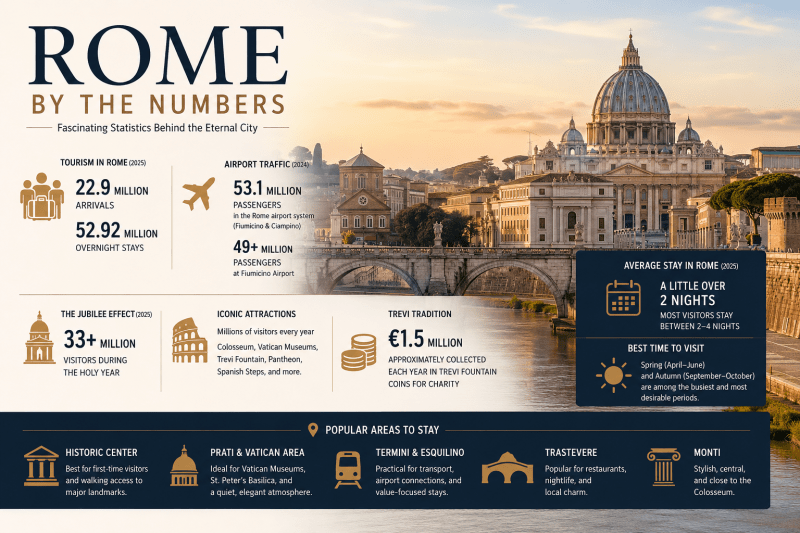
Rome remains one of Europe’s top travel destinations, recording 22.9 million arrivals and 52.92 million overnight stays in 2025. Its airport system handled 53.1 million passengers in 2024, while the Jubilee Year attracted over 33 million visitors. With an average stay of just over two nights and strong demand around landmarks like the Vatican, Colosseum, and Trevi Fountain, travelers benefit from booking early and choosing the right area to stay with RomeHotels.
Rome by the Numbers
Rome is often described through its beauty: ancient ruins, Renaissance churches, lively piazzas, and unforgettable food. But behind the romance of the Eternal City lies another fascinating story — one told through statistics.
Every year, millions of travelers arrive in Rome to walk through the Colosseum, visit the Vatican, toss a coin into the Trevi Fountain, and experience one of the world’s most iconic city breaks. For visitors planning their stay, these numbers reveal not only how popular Rome is, but also why choosing the right hotel location matters.
At RomeHotels, we help travelers understand the city better — not just by where to stay, but by how Rome moves, grows, and welcomes the world.
A Record-Breaking Destination for Tourism
Rome continues to confirm its status as one of the most visited cities in Europe. In 2024, the city recorded 22.2 million arrivals and 51.4 million overnight stays, marking a historic tourism record for the Italian capital. In 2025, Rome surpassed that figure again, reaching 22.9 million arrivals and 52.92 million overnight stays.
These statistics show more than simple popularity. They reflect Rome’s ability to attract different types of travelers throughout the year: culture lovers, couples, families, business visitors, religious pilgrims, and weekend city-break tourists.
For hotel guests, this means one important thing: booking early is often essential, especially during spring, autumn, holidays, and major events.
Rome’s Airports Handle Tens of Millions of Passengers
Rome is served mainly by Leonardo da Vinci–Fiumicino Airport and Ciampino Airport, which together form one of Italy’s busiest airport systems. In 2024, the Roman airport system counted 53.1 million passengers, a sharp increase compared with the previous year.
Fiumicino alone handled more than 49 million passengers in 2024, making it one of Europe’s major aviation hubs.
For travelers, this means Rome is highly accessible from Europe, North America, the Middle East, and beyond. It also explains why hotels near transport links — such as Termini Station, the Vatican area, the historic center, and airport-connected routes — remain in high demand.
The Jubilee Effect: Millions More Visitors
The 2025 Jubilee Year brought a major increase in religious and cultural travel to Rome. The Holy Year drew over 33 million visitors, exceeding earlier projections.
Events like the Jubilee highlight Rome’s unique role as both a global tourism capital and a spiritual center. For visitors, they also create periods of very high accommodation demand, particularly near the Vatican, Prati, St. Peter’s Basilica, and central transport hubs.
That is why platforms like RomeHotels are especially useful for comparing hotel options across different neighborhoods and travel needs.
Rome’s Attractions: Ancient Sites with Modern Crowds
Rome’s most famous landmarks are not only beautiful — they are statistical giants.
The Colosseum, Roman Forum, Pantheon, Trevi Fountain, Spanish Steps, Vatican Museums, and St. Peter’s Basilica attract enormous numbers of visitors every year. During peak travel periods, the most popular sites may require advance booking, timed entry, or careful planning.
The Trevi Fountain is a perfect example of how statistics and tradition meet. The coins thrown into the fountain generate around €1.5 million per year for charity.
For travelers, the message is clear: Rome rewards preparation. Staying close to your main points of interest can save time, reduce transport stress, and make the trip more enjoyable.
How Long Do Travelers Stay in Rome?
With over 52 million overnight stays and 22.9 million arrivals in 2025, the average visitor stay in Rome was a little over two nights. This reflects the city’s popularity as both a short-break destination and part of wider Italian itineraries.
Many travelers combine Rome with Florence, Venice, Naples, the Amalfi Coast, or Tuscany. Others use Rome as a base for day trips to Tivoli, Ostia Antica, or nearby wine regions.
For a first visit, however, statistics suggest that a short stay can feel very full. To experience Rome properly, many visitors benefit from at least three to four nights, especially if they want to include the Vatican, Ancient Rome, local dining, shopping, and relaxed neighborhood exploration.
Hotel Demand Changes by Season
Rome is no longer only a summer destination. In fact, spring and autumn are often among the busiest and most desirable periods. Travelers are attracted by mild weather, cultural events, and more comfortable sightseeing conditions.
High-demand periods usually include:
- Easter and religious holidays
- April to June
- September and October
- Christmas and New Year
- Major Vatican events
- International conferences and sporting events
Because Rome attracts both leisure and business travelers, hotel prices can change significantly depending on dates, location, and availability.
This is where RomeHotels can help visitors compare areas and choose accommodation based on budget, travel style, and convenience.
What the Numbers Say About Where to Stay
Rome is a large city, and statistics alone cannot tell you the perfect neighborhood. But visitor behavior reveals clear patterns.
Travelers who want classic sightseeing often prefer the historic center, near the Pantheon, Piazza Navona, Trevi Fountain, or Spanish Steps. Visitors focused on Vatican City usually choose Prati or Borgo. Those who need fast transport often stay near Termini Station. Travelers seeking nightlife and local atmosphere may prefer Trastevere or Monti.
Each area offers a different version of Rome:
- Historic Center — best for first-time visitors and walking access to major landmarks.
- Prati and Vatican Area — ideal for Vatican Museums, St. Peter’s Basilica, and a quieter, elegant atmosphere.
- Termini and Esquilino — practical for transport, airport connections, and value-focused stays.
- Trastevere — popular for restaurants, nightlife, and local charm.
- Monti — stylish, central, and close to the Colosseum.
Rome in Numbers: What Travelers Should Remember
Rome’s statistics tell a powerful story. This is a city with record-breaking tourism, major airport traffic, world-famous landmarks, and millions of visitors from every continent.
But the most important number for each traveler is personal: the number of days they have to enjoy the Eternal City.
Whether you are visiting for two nights, a long weekend, a family holiday, or a once-in-a-lifetime Italian journey, choosing the right hotel can shape your entire experience.
With RomeHotels, travelers can explore accommodation options across Rome and plan their stay with confidence — in a city where every street, square, and statistic tells part of a much larger story.
Final Thoughts
Rome is ancient, but its travel story is constantly evolving. The latest tourism numbers show a city that continues to grow in popularity while maintaining its timeless appeal.
From more than 52 million overnight stays to tens of millions of airport passengers and record-breaking visitor demand, Rome remains one of the world’s great urban destinations.
For travelers, the lesson is simple: plan early, choose your neighborhood wisely, and let RomeHotels help you find the right place to stay in the Eternal City.